
Know before you go
- The City says Atlanta has over 240 neighborhoods grouped into 25 Neighborhood Planning Units.
- Fewer than half of homes in the city are owner-occupied, 46.4 percent in Census figures.
- City of Atlanta homeowners get $30,000 off assessed value for city operations, parks and city school taxes.
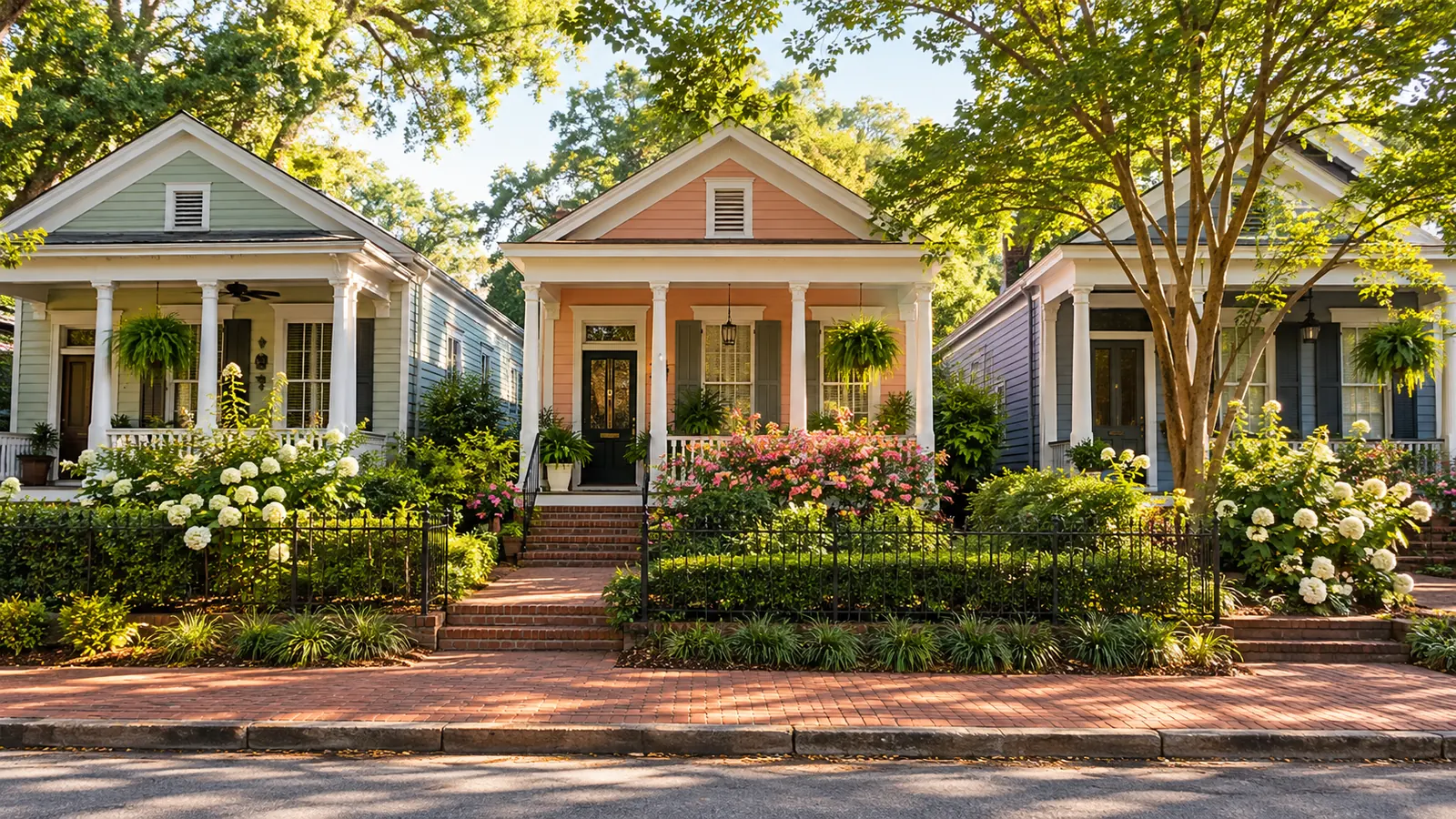
Intown is the word locals use for the older, closer-in parts of Atlanta, the neighborhoods near downtown, Midtown and the ring of the Beltline. There is no official boundary for it, and that is the first thing a newcomer should know. The City itself describes Atlanta as a place of more than 240 neighborhoods, grouped into 25 Neighborhood Planning Units, or NPUs. Each NPU is the official channel for residents to give input on plans and hear from City government. When you look at a listing, the neighborhood name tells you less than the NPU, the county and the school zone.
One city, two counties
Most of the City of Atlanta lies in Fulton County, but part of it lies in DeKalb County. The DeKalb tax commissioner’s 2026 rate sheet lists a separate tax district for Atlanta, with a county total of 11.386 mills and no DeKalb County school levy; the city has its own school system, Atlanta Public Schools. A home on one side of the county line can carry a different county bill from a similar home a few blocks away. If you are comparing two intown houses, ask which county each one is in before comparing prices.
Rail access, station by station
MARTA’s station list gives an average travel time from each station to the airport. That is not your commute, but it is a fair way to see how central a station is. A few of the intown stops:
| Station | Average minutes to the airport |
|---|---|
| Five Points | 16 |
| West End | 12 |
| King Memorial | 19 |
| North Ave | 19 |
| Midtown | 20 |
| Arts Center | 22 |
| Inman Park | 22 |
| Edgewood-Candler Park | 24 |
| Lindbergh | 26 |
| East Lake | 27 |
| Lenox | 30 |
| Buckhead | 32 |
A one-way MARTA trip costs $2.50 with up to four transfers in three hours, and a 30-day pass costs $95. If you can live within a walk of one of these stations, a car can become optional for some trips. Our MARTA and Commuting in Atlanta: Lines, Fares, Parking and Commute Times guide explains how the four lines connect.
The Beltline factor
The Atlanta Beltline is a planned 22-mile loop of trails, parks and future transit that the organization says connects 45 neighborhoods. In its April 2026 report, Atlanta Beltline Inc. said 14.8 miles of the mainline trail had been delivered, along with 10.3 miles of connector trails, and that 85 percent of the loop was either complete or under construction. Homes near finished segments and homes near planned ones are in different situations, so check the status of the nearest piece. We cover it in Living Near the Atlanta Beltline: Which Segments Are Open, What Is Coming and What to Check.
Tip: Walk the route from a home to the nearest trail entrance or station yourself. A distance that looks short on a map can include a highway crossing or a steep street.
A city where many people rent
The Census Bureau puts the owner-occupied rate in the City of Atlanta at 46.4 percent for 2020-2024, which means more than half of occupied homes are rented. Households are small, at 2.00 people per household, and the median gross rent is $1,711. For newcomers this has a practical side: renting intown first is a common way to learn the city before buying. The rules that protect renters are in Renting in Georgia: Security Deposits, Repairs and Your Rights as a Tenant.
What the city adds to an owner’s tax bill
A City of Atlanta homeowner pays city taxes on top of county and school taxes. Fulton County’s homestead guide says the basic exemption takes $30,000 off assessed value for county taxes and $2,000 off school taxes, and for city residents it also takes $30,000 off city operations, the city park fund and city school taxes. The City’s own floating exemption raises the base value by 2.6 percent a year, under the legislation that created it, so the taxable value of a home with the exemption grows slowly even when market prices jump.
Atlanta Public Schools has kept its rate at 20.5 mills since 2022, according to its budget page. On the city’s median home value of $439,600, the assessed value is $175,840, so the school levy alone would be about $3,605 a year before exemptions. The details of applying are in The Georgia Homestead Exemption for Atlanta-Area Buyers: Who Qualifies and How It Floats.
Questions to ask about any intown address
- Which NPU is it in, and when does that NPU meet?
- Is the property in Fulton or DeKalb County?
- Which elementary, middle and high school does Atlanta Public Schools assign to it?
- How far is the nearest MARTA station, and is the walk pleasant?
- Is the nearest Beltline segment open, under construction or still planned?
- For a rental, does the landlord manage more than ten units, which brings extra deposit rules?
Density and space
The City of Atlanta covers 135.31 square miles with about 3,686 people per square mile in 2020, according to the Census Bureau. Decatur, next door, is denser at about 5,423 people per square mile on 4.60 square miles. Intown living usually means smaller lots and more neighbors than the outer suburbs, but also shorter trips to the center. If more space matters more than distance, look at Where to Live in Metro Atlanta: Comparing Cities and Counties by Cost, Commute and Taxes for comparisons across the metro.