
Know before you go
- A one-way MARTA fare is $2.50 and includes up to four transfers within three hours.
- The 30-day pass costs $95, the price of 38 single rides.
- Mean commute times in the Census figures range from 24.9 minutes in Dunwoody to 32.8 minutes in Gwinnett County.
Most of metro Atlanta was built around the car, and for many residents the daily commute is a drive. MARTA, the region’s transit agency, still shapes where people choose to live, because a home within reach of a rail station opens up trips to downtown, Midtown and the airport without traffic or parking. This guide covers how the system fits together, what it costs and how commute times compare across the metro.
How the rail lines fit together
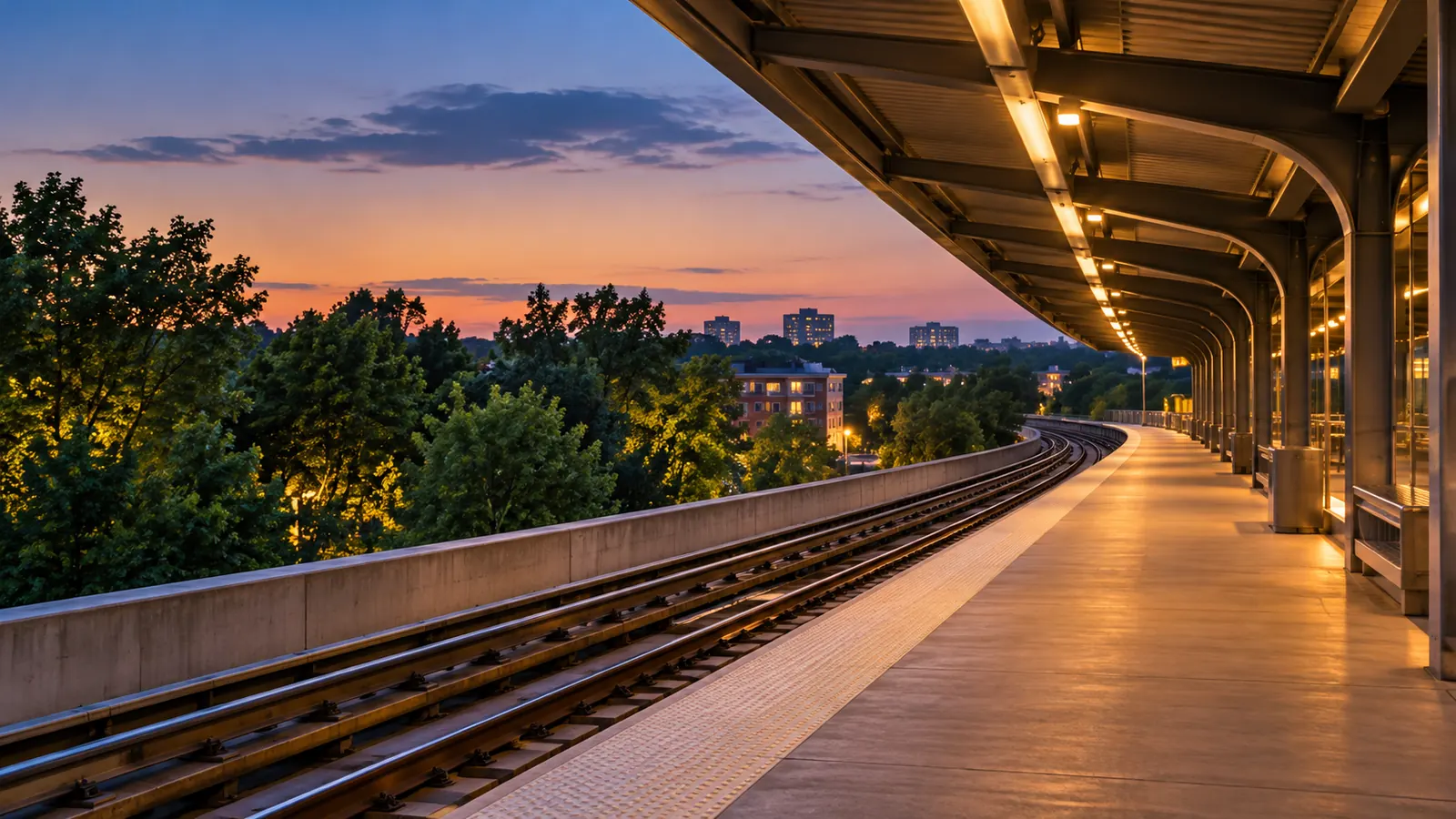
MARTA lists 38 rail stations. Two lines run north-south: the Red Line, whose last station is North Springs, and the Gold Line, whose last station is Doraville. They split at Lindbergh Center, and at the south end both reach Airport station, which sits between the north and south baggage claim areas of the domestic terminal. The Blue and Green lines run east-west; Inman Park/Reynoldstown is on both, and Decatur station is on the Blue Line. Five Points downtown is MARTA’s largest and busiest station.
Tip: Coming from the airport to Buckhead, Medical Center, Dunwoody, Sandy Springs or North Springs after rush hour, MARTA says you may need to take the Gold train and change to the Red Line at Lindbergh Center.
What it costs
| Fare or pass | Price |
|---|---|
| One-way trip, rail, bus, Rapid and Reach | $2.50 |
| Reduced fare: seniors over 65, Medicare, people with disabilities | $1.00 |
| Children 46 inches and under (two per paying adult) | Free |
| Atlanta Streetcar, one way (no transfers) | $1.00 |
| 1-Day (24-hour) pass | $9.00 |
| 7-Day pass | $23.75 |
| 10-Trip pass | $25 |
| 20-Trip pass | $42.50 |
| 30-Day pass | $95 |
Every trip includes up to four transfers within three hours, so a bus-to-train-to-bus commute costs one fare. MARTA asks riders to use exactly the same payment method on each leg, for example the same debit card tapped on the bus and at the faregate, or the transfer may not register. Transfers cannot be used for a round trip on the same route, and they do not apply to the streetcar.
Does a 30-day pass pay off?
At $2.50 a ride, the $95 pass equals 38 one-way trips. A commuter who rides to work and back on 21 workdays makes 42 trips, which would cost $105 one ride at a time, so the pass comes out ahead by $10 before any weekend trips. Someone who works from home two days a week makes far fewer trips, and the 20-trip pass at $42.50 may suit them better.
Parking at the stations
MARTA’s parking page says lots and decks are open 24 hours and parking is free for stays under 14 hours if you carry your ticket and present it at the exit machine. Long-term parking costs $7.00 after 14 hours at Dunwoody, Medical Center, Kensington, Lenox and Sandy Springs, and $10.00 at College Park, Doraville, Lindbergh and North Springs. The end stations are built for drivers: North Springs has parking decks with over 2,300 spaces and Doraville a deck with over 1,200. Inman Park/Reynoldstown has 366 free daily spaces and no overnight parking. Check the station page before a long trip, since station pages and the general parking page do not always match.
Average trip time to the airport
MARTA lists an average travel time to the airport from every station. It is a quick way to see how far out a station really is:
| Station | Minutes | Station | Minutes |
|---|---|---|---|
| College Park | 1 | Lindbergh | 26 |
| East Point | 4 | Decatur | 29 |
| West End | 12 | Lenox | 30 |
| Five Points | 16 | Buckhead | 32 |
| Midtown | 20 | Chamblee | 37 |
| Inman Park | 22 | Dunwoody | 38 |
| Edgewood-Candler Park | 24 | Doraville | 40 |
| Bankhead | 25 | North Springs | 43 |
Commute times by place
The Census Bureau’s mean travel time to work covers every mode, car included, for workers who live in each place. For 2020-2024:
- Dunwoody 24.9 minutes, Brookhaven 25.1, Sandy Springs 25.8, Decatur 25.9
- Alpharetta 26.3, City of Atlanta 26.5, Marietta 27.5, Fulton County 27.7
- Kennesaw 28.6, Cobb County 29.4, Johns Creek 30.1, DeKalb County 30.4
- Lawrenceville 32.1, Gwinnett County 32.8
Places with rail stations or close to the job centers tend to sit at the shorter end, while the large outer counties sit at the longer end. A county average hides a lot, so test your own route at the hour you would travel.
Beyond the rail lines
Buses extend MARTA beyond the stations. Route 185 runs from North Springs toward Alpharetta and Route 140 along North Point Parkway, both useful for north Fulton; see Alpharetta and North Fulton: Sandy Springs, Roswell, Johns Creek and Alpharetta Compared. MARTA’s fare page also lists regional operators such as CobbLINC, Cobb County’s transit service. The Atlanta Beltline adds walking and biking trails between intown neighborhoods, covered in Living Near the Atlanta Beltline: Which Segments Are Open, What Is Coming and What to Check.
If commute time is high on your list, compare places in Where to Live in Metro Atlanta: Comparing Cities and Counties by Cost, Commute and Taxes before you pick a neighborhood.